
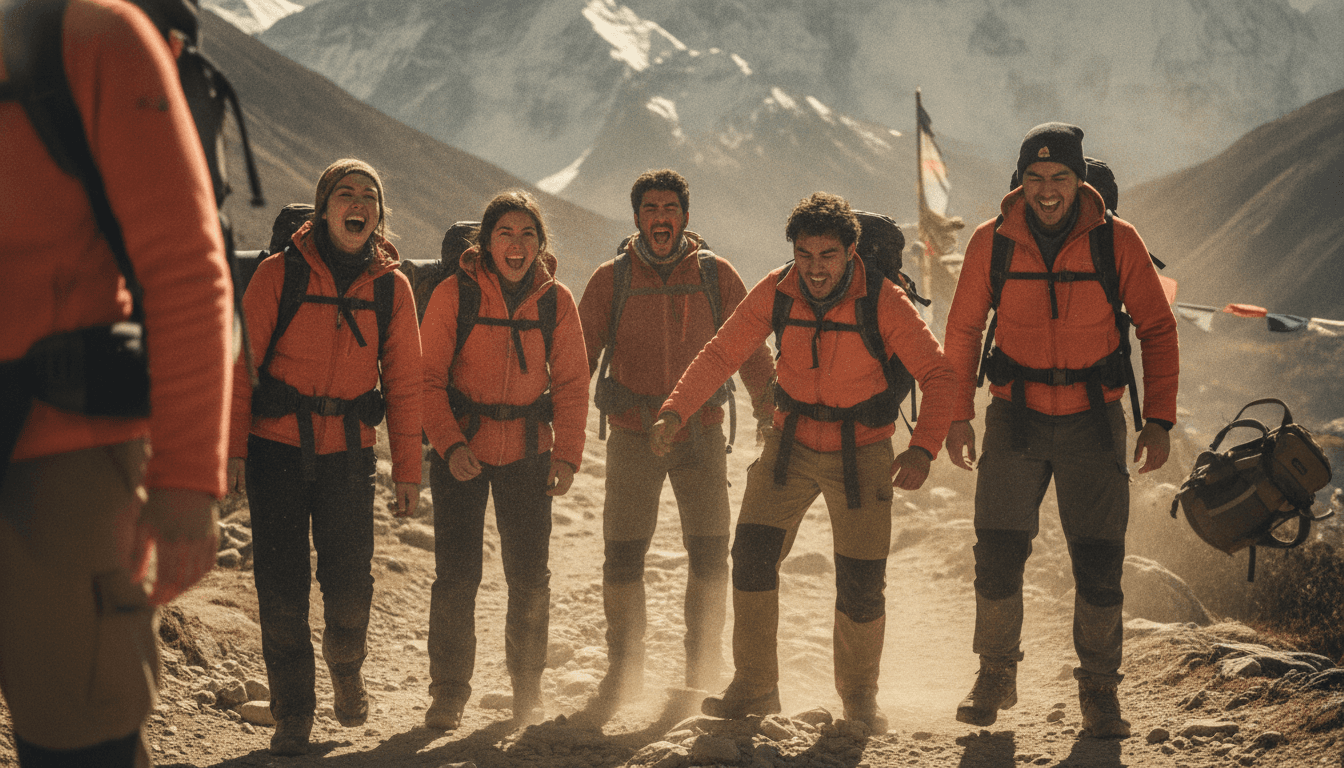
Everest Base Camp Trek — Self-Launched
11 days · Nepal
Alpine Ramble Treks charges £975
No-markup version: ~£480 per person
Estimate only, not a guaranteed price. Always verify costs independently before booking.
This self-launched version of the classic Everest Base Camp trek follows the same iconic 11-day route as Alpine Ramble Treks — Kathmandu to Lukla by scenic flight, through Phakding, Namche Bazaar, Tengboche, and all the way to Base Camp at 5,364m — without the guided group price tag. You'll hire a licensed independent guide and porter directly in Kathmandu (strongly recommended for safety and acclimatisation at altitude), book your own teahouse accommodation along the trail, and sort your own Lukla flights. All costs are approximate estimates per person.
Day-by-day
Kathmandu → Lukla → Phakding
Phakding (2,610m)
Take an early morning domestic flight from Kathmandu's Tribhuvan Airport to Lukla's Tenzing-Hillary Airport — one of the world's most dramatic runways. Flights depart around 06:00–07:00 and take roughly 35 minutes. Book in advance with Sita Air or Tara Air (~£130 return pp). From Lukla (2,860m), begin your first day of trekking downhill through Cheplung village along the Dudh Kosi River to Phakding. A gentle 3–4 hour walk — a good warm-up for the days ahead. Stay in a teahouse/guesthouse in Phakding.
🚌Domestic flight Kathmandu–Lukla with Sita Air or Tara Air (~£65 one way). Pre-book as flights fill fast. Take a taxi or pre-booked hotel transfer to the domestic terminal.
🛏Teahouse/guesthouse in Phakding — e.g. Riverside Lodge or Buddha Lodge. Expect to pay ~£6–10/night for a basic twin room.
- →Domestic flight Kathmandu to Lukla — book with Sita Air or Tara Air (~£65 one way, book well in advance)
- →Trek Lukla to Phakding via Cheplung village (~3–4 hours, ~8km)
- →Views of the sacred Mt. Khumbila
- →Walk alongside the Dudh Koshi River
Phakding → Namche Bazaar
Namche Bazaar (3,440m)
Today's trek is the most demanding so far — a 5–6 hour, 11km ascent finishing with a steep 600m climb up to Namche Bazaar. You'll cross several iconic suspension bridges including the Hillary Bridges over the Dudh Koshi and Bhote Koshi rivers, pass through Monjo village, and enter the Sagarmatha (Everest) National Park — entry permit required here (~£25, purchase in advance in Kathmandu or at the checkpoint). Namche is the gateway to the Khumbu region and a bustling hub with bakeries, gear shops, and ATMs (the last reliable ones on the trail). Stay 2 nights here for acclimatisation.
🚌On foot. No motorised transport on the trail.
🛏Teahouse in Namche Bazaar — e.g. Khumbu Lodge or Hotel Yeti. Basic twin rooms ~£8–12/night. Namche has slightly more comfortable options than higher villages.
- →Trek Phakding to Namche Bazaar (~11km, 5–6 hours)
- →Cross iconic Hillary Bridges suspension bridges over the Dudh Koshi River
- →Pass through Monjo village
- →Enter Sagarmatha National Park (permit required — buy in Kathmandu to save time)
Acclimatisation Day in Namche Bazaar
Namche Bazaar (3,440m)
A crucial rest and acclimatisation day — do not skip this. The golden rule at altitude is 'climb high, sleep low'. Take the recommended 2-hour hike up to the Everest View Hotel at Syangboche (3,900m) for jaw-dropping panoramic views of Everest, Lhotse, Ama Dablam, and Thamserku — then descend back to Namche to sleep. Visit the free Sherpa Culture Museum in the morning and explore the Saturday market if your timing aligns. Drink plenty of water, eat well, and avoid alcohol.
🚌All on foot within and around Namche Bazaar.
🛏Same teahouse as night 2 in Namche Bazaar.
- →Acclimatisation hike to Everest View Hotel at Syangboche (3,900m) — ~2 hours return, free to walk
- →Visit the Sherpa Culture Museum, Namche Bazaar (free or small donation)
- →Explore Namche Bazaar market and gear shops
- →Optional: visit Sagarmatha National Park headquarters and visitor centre (free)
Namche Bazaar → Tengboche
Tengboche (3,867m)
A beautiful and varied day of trekking (~5–6 hours, ~10km). Leave Namche and follow the trail with stunning views of Thamserku, Kusum Kangri, and Kantega. Descend steeply to the river crossing at Phunki Tenga, then climb back up through rhododendron forests to the famous Tengboche Monastery — the largest in the Khumbu region. If you arrive in the late afternoon, you can attend the monastery's evening puja (prayer ceremony) for free. Sleep here at altitude; the cold increases noticeably from here on — make sure your sleeping bag is rated to at least -10°C.
🚌All on foot.
🛏Teahouse in Tengboche — e.g. Himalayan Hotel or Tengboche Guest House. ~£6–10/night. Rooms get simpler at higher altitude.
- →Trek Namche Bazaar to Tengboche (~10km, 5–6 hours)
- →Views of Thamserku, Kusum Kangri, and Kantega peaks
- →Cross Phunki Tenga river bridge and climb through rhododendron forest
- →Visit Tengboche Monastery — attend evening puja ceremony (free, respectful dress required)
- →Walk past traditional Buddhist stupas along the trail
Tengboche → Dingboche
Dingboche (4,410m)
Trek from Tengboche through the picturesque Imja Valley, passing the villages of Pangboche and Shomare before reaching Dingboche (~5–6 hours, ~10km). You're now well above 4,000m — headaches and breathlessness are common. Walk slowly, stay hydrated, and listen to your body. Dingboche is a lovely stone-walled village with views of Island Peak and Ama Dablam. You'll spend 2 nights here for acclimatisation before the push to Base Camp.
🚌All on foot.
🛏Teahouse in Dingboche — e.g. Eco Resort or Dingboche Inn. ~£6–10/night. Meals included in teahouse board are an economical option at this altitude.
- →Trek Tengboche to Dingboche via Pangboche (~10km, 5–6 hours)
- →Pass through Pangboche village — visit the oldest monastery in the Khumbu (small donation welcome)
- →Views of Island Peak (Imja Tse) and Ama Dablam
- →Arrive in Dingboche and rest — altitude awareness is key from here
Acclimatisation Day in Dingboche → Lobuche
Lobuche (4,940m)
The original itinerary references a visit to Everest Base Camp and then Gorakshep/Lobuche, but the standard EBC route spends an acclimatisation day in Dingboche with a hike to Nagarjun Hill (5,100m) for views of Makalu, Cho Oyu, and Baruntse, before trekking to Lobuche. Follow this proven pattern: morning acclimatisation hike, afternoon rest, then next morning push to Lobuche (~4–5 hours from Dingboche, ~8km). You'll pass the Khumbu Glacier moraines and the Thukla memorials — stone cairns honouring climbers lost on Everest. A deeply moving place.
🚌All on foot.
🛏Teahouse in Lobuche — e.g. Lobuche Guest House. Very basic facilities at this altitude (~£6–10/night). Expect cold nights — sleeping bag essential.
- →Morning acclimatisation hike to Nagarjun Hill (5,100m) for panoramic Himalayan views — ~3 hours return
- →Trek Dingboche to Lobuche via Thukla Pass (~8km, 4–5 hours)
- →Visit Thukla memorials — cairns for Everest climbers
- →Views of Mt. Tawache, Nuptse, Ama Dablam, and Pokalde
Lobuche → Gorakshep → Everest Base Camp → Gorakshep
Gorakshep (5,164m)
The big day. Trek from Lobuche to Gorakshep (~3–4 hours, ~8km) via the Khumbu Glacier. Drop your pack at your teahouse in Gorakshep, then push on to Everest Base Camp at 5,364m (~2–3 hours each way). The trail crosses rocky glacier moraine — poles are essential. EBC itself is a rocky, glaciated camp (no mountain views from camp — that's from Kala Patthar). Return to Gorakshep for the night. A long, exhausting but utterly unforgettable day. Note: Kala Patthar (5,545m) for sunrise views is usually done on Day 8 morning — strongly recommended.
🚌All on foot.
🛏Teahouse in Gorakshep — e.g. Everest Inn or Summit Trekkers Lodge. The highest, most basic teahouses on the route (~£6–10/night). Very cold — keep your water bottle inside your sleeping bag.
- →Trek Lobuche to Gorakshep via Khumbu Glacier (~8km, 3–4 hours)
- →Trek to Everest Base Camp (5,364m) and back to Gorakshep (~7km return, 4–5 hours)
- →Walk across Khumbu Glacier moraine
- →Photography at Everest Base Camp — trekking permit required (TIMS card + Sagarmatha NP permit, sorted in Kathmandu)
Gorakshep (Kala Patthar) → Pheriche
Pheriche (4,371m)
Wake at 04:00–04:30 for the pre-dawn hike up Kala Patthar (5,545m) — the best viewpoint on the entire trek with a direct, iconic view of Everest's summit pyramid at sunrise. Allow 1.5–2 hours to ascend. Then descend all the way back through Lobuche and onwards to Pheriche or Dingboche for the night (~6–7 hours total trekking). Descending feels dramatically easier than ascending — your body will thank you. The altitude drops nearly 1,000m today, and you'll feel the air thicken with every step down.
🚌All on foot.
🛏Teahouse in Pheriche — e.g. Himalayan Hotel Pheriche. ~£6–10/night. Better facilities than Gorakshep — enjoy a hot shower if available.
- →Pre-dawn hike to Kala Patthar (5,545m) for sunrise views of Everest — the iconic shot (free, ~1.5 hours from Gorakshep)
- →Descend from Kala Patthar to Gorakshep
- →Trek Gorakshep to Pheriche/Dingboche (~12km, 5–6 hours descent)
- →Visit mani prayer walls and stupas along descent trail
Pheriche → Namche Bazaar
Namche Bazaar (3,440m)
A long but rewarding descent day (~7–8 hours, ~20km) back through the Khumbu valley, retracing your steps through Pangboche, Tengboche Monastery, Phunki Tenga, and back up to Namche Bazaar. The reverse views of the peaks — now familiar friends — are just as spectacular. Cross the Dudh Kosi River and revisit Tengboche Monastery if you wish. By the time you reach Namche, the oxygen-rich air will feel almost luxurious. Celebrate with a slice of apple pie and a Everest beer — Namche's bakeries are legendary.
🚌All on foot.
🛏Teahouse/guesthouse in Namche Bazaar — treat yourself to a slightly better room tonight. ~£8–15/night.
- →Trek Pheriche to Namche Bazaar via Tengboche (~20km, 7–8 hours)
- →Return visit to Tengboche Monastery
- →Cross Dudh Kosi River suspension bridges
- →Enjoy Namche Bazaar's bakeries and restaurants — well earned!
Namche Bazaar → Lukla
Lukla (2,860m)
The final full day of trekking — a long descent (~6–7 hours, ~18km) from Namche back to Lukla, retracing the trail through Jorsalle, Monjo, the Hillary Bridges, and Phakding. Pass through the Sagarmatha National Park gate at Monjo. The descent is mostly downhill and your legs will feel it — poles help enormously. Arrive in Lukla in the late afternoon. Check in for your return flight (confirm timing the day before — mountain weather can cause delays). Celebrate your achievement over a dal bhat and a beer at one of Lukla's trekker-friendly lodges.
🚌All on foot.
🛏Guesthouse in Lukla — e.g. Sherpa Guest House or Yak Hotel. ~£8–12/night. Better facilities than higher on the trail.
- →Trek Namche Bazaar to Lukla via Phakding (~18km, 6–7 hours)
- →Pass through Jorsalle and Monjo villages
- →Cross twin suspension bridges over Dudh Koshi River
- →Check in at Lukla and confirm next morning's flight
- →Celebrate completing the EBC trek!
Lukla → Kathmandu — Free Time
Kathmandu
Early morning return flight from Lukla to Kathmandu (~35 minutes). Note: Lukla flights are highly weather-dependent — delays of 1–2 days are common, especially during monsoon season (June–September). Always build buffer days before onward international flights. Back in Kathmandu, celebrate your achievement. Optional activities include a Chitwan jungle safari (book via GetYourGuide or direct, ~£60–120/2 days), white-water rafting on the Trishuli River (~£30–40, bookable in Thamel), a Kathmandu city heritage tour (Pashupatinath, Boudhanath, Swayambhunath, ~£20–30 via GetYourGuide), or simply exploring Thamel's shops for souvenirs. Your hotel/guesthouse in Kathmandu handles its own check-in — no operator transfer needed.
🚌Return domestic flight Lukla–Kathmandu (~£65 one way). Pre-book. Taxi from domestic terminal to Thamel ~£3–5.
🛏Guesthouse or budget hotel in Thamel, Kathmandu — e.g. Hotel Encounter Nepal or Zostel Kathmandu. ~£10–20/night for a good double/twin.
- →Return flight Lukla to Kathmandu with Sita Air or Tara Air (~£65)
- →Optional: Kathmandu city heritage tour — Pashupatinath, Boudhanath, Swayambhunath (~£20–30 via GetYourGuide)
- →Optional: white-water rafting on the Trishuli River (~£30–40, bookable in Thamel)
- →Optional: Chitwan National Park jungle safari (2-day trip, ~£60–120, bookable in Thamel or via GetYourGuide)
- →Explore Thamel neighbourhood — souvenir shopping, restaurants
Self-launched vs. Alpine Ramble Treks
| This itinerary (self-launched) | Alpine Ramble Treks | |
|---|---|---|
| Price per person | ~£480 | £975 |
| Duration | 11 days | 11 days |
| Who books it | You and your group, direct | Tour operator, guided group |
| Savings | £495 per person (51%) | |
Estimate only, not a guaranteed price. Always verify costs independently before booking.
Want to see more Alpine Ramble Treks-style trips? Check them out here.~£480
estimated per person
You never pay Travel Crew for this — you pay hostels, transport, and activity providers directly, the same as if you'd booked it all yourself.
This publishes your dates so other travellers can find and join you — no tour operator needed.
Customise with Tour BusterCreated by

Travel Crew
0 trips
Frequently asked questions
How much does Everest Base Camp Trek — Self-Launched cost?+
Doing it yourself with this self-launched itinerary costs an estimated £480 per person for 11 days in Nepal. This is an AI-generated estimate based on typical budget-traveller prices — actual costs will vary by season and how you book.
Is this cheaper than booking with Alpine Ramble Treks?+
Yes — Alpine Ramble Treks charges around £975 per person for a similar tour. Doing the same route independently, using the same standard of accommodation and activities, costs an estimated £480 — a saving of roughly £495 (51%) per person.
How long is the Nepal trip?+
This itinerary runs 11 days, covering 11 day-by-day stops through Nepal.
How do I join this trip?+
You can join an existing open departure using this itinerary if one is scheduled, or launch your own departure with your own dates and invite other travellers to join you — no tour operator required.
Isn't it easier to just use a tour operator?+
Well, yes, a tour operator will book all the individual parts of your travel for you and provide a guide. That's obvious, but doing this has the potential to save the group thousands, which can in turn improve your itinerary substantially or save you huge amounts of money. Also, when you launch a departure, Travel Crew has tools in place to help you book the individual sections of the trip or make it easier for you to do this as a group. Really, you do not need a middle man. If you are more comfortable paying more and using a middle man, then you should certainly do this.
Is it safer to book through a tour operator?+
Arguably, there isn't much difference. A self-launched trip runs on the same principle as a group travel crew: collective responsibility, everyone looking out for each other, the same way it would if a group of friends organised the trip themselves — because that's exactly what's happening. You should always take out travel insurance before you go, self-launched or not; that doesn't change either way. Every open departure is published publicly with real dates and a real trip organiser, so it's never an anonymous arrangement, and our support team is reachable any time you need help, including in an emergency while you're away. Longer-term, we're building direct relationships with ground DMCs in popular destinations, offered as an optional paid add-on for extra on-the-ground support. Ultimately, though, the group is responsible for its own conduct and safety on a self-launched trip, same as on any trip you plan yourself.
What kind of trip is this?+
This is a adventure, hiking, culture trip through Nepal, self-launched rather than run by a tour operator — you organise it with a group you find or bring yourself.
Would you like to name the operator, name the trip, or have any suggestions about how to improve this itinerary?
Drop your comment below — if you've done a similar route, tell us what worked, what you'd add, or what you'd skip.
No comments yet — be the first to share your take.
Sign in to leave a comment.